
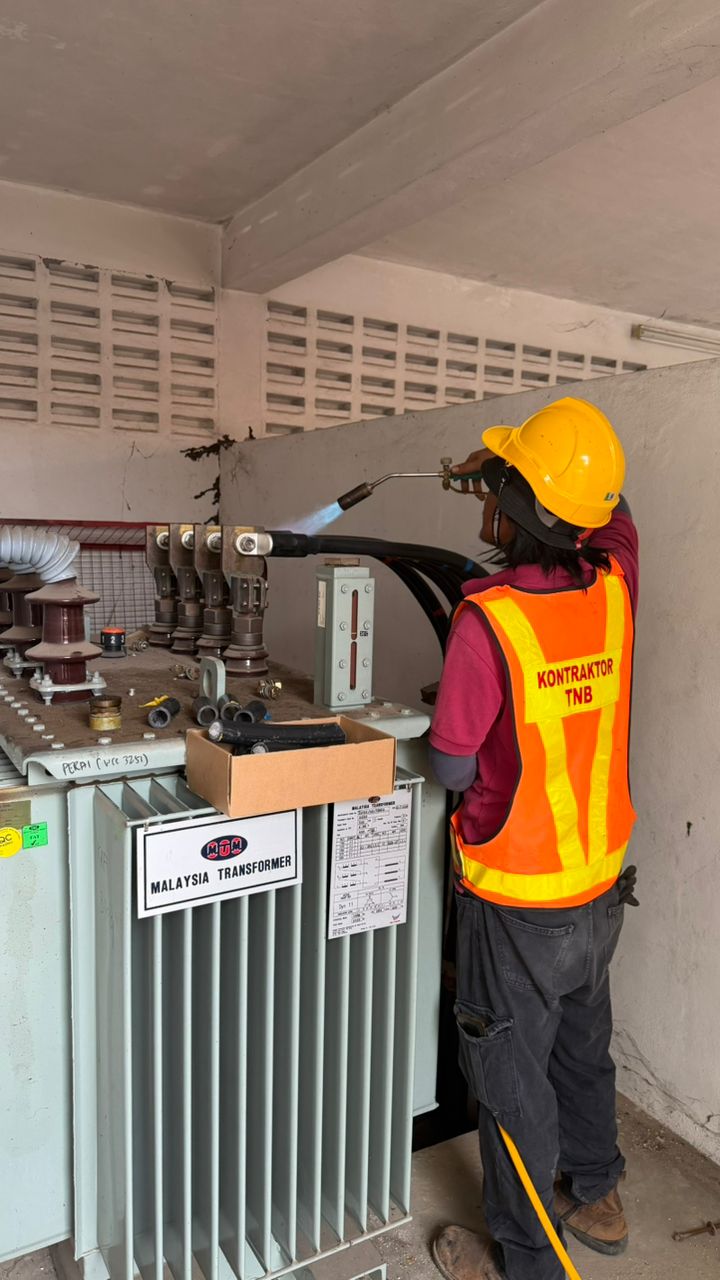
Every factory, commercial building and housing estate connected to the grid depends on a transformer stepping medium voltage down to a usable level. When NIKKISO-AYSHA installs a new unit or takes over the maintenance of an existing one, we treat it as a long-term asset: careful positioning, disciplined termination, thorough pre-energisation testing and a planned maintenance regime are what turn a transformer into 25 years of trouble-free supply rather than an unplanned outage.
The role of a distribution transformer
A transformer transfers electrical energy between two circuits through electromagnetic induction, changing the voltage while keeping the power (minus small losses) the same. In a distribution network the transformer typically steps 11kV or 33kV down to 415/240V so that it can be supplied safely to consumers. Because it sits between the incoming high-voltage feeder and every downstream load, a single transformer failure can take an entire building or estate off supply — which is exactly why installation quality and maintenance discipline matter so much.
Types of transformer
Before installation, the right type of transformer must be selected for the site and load. The two most important distinctions are the cooling/insulation medium and the position in the network:
- Oil-immersed transformers — the windings sit in insulating mineral oil that both cools and insulates them. They offer high efficiency and strong overload capacity, and are the standard choice for outdoor 11kV and 33kV distribution.
- Dry-type (cast-resin) transformers — cooled by air and insulated with cast resin instead of oil. With no oil to leak or ignite, they are preferred indoors, in basements and in buildings where fire risk must be minimised.
- Distribution transformers — smaller ratings that deliver the final step-down to consumer voltage, sized for the connected load.
- Power transformers — larger units used at main intake and PMU substations to handle bulk transfer at 33kV and above.
The installation process
Installing a distribution transformer is a controlled sequence, not a single lift. Each stage is inspected before the next begins:
- Delivery & inspection — the transformer is checked on arrival for transit damage, impact recorder readings, correct rating plate and oil level before it leaves the delivery vehicle.
- Positioning on the plinth — the unit is craned or skidded onto a level, load-rated concrete plinth with adequate clearance, ventilation and, for oil units, a bund or oil-containment provision.
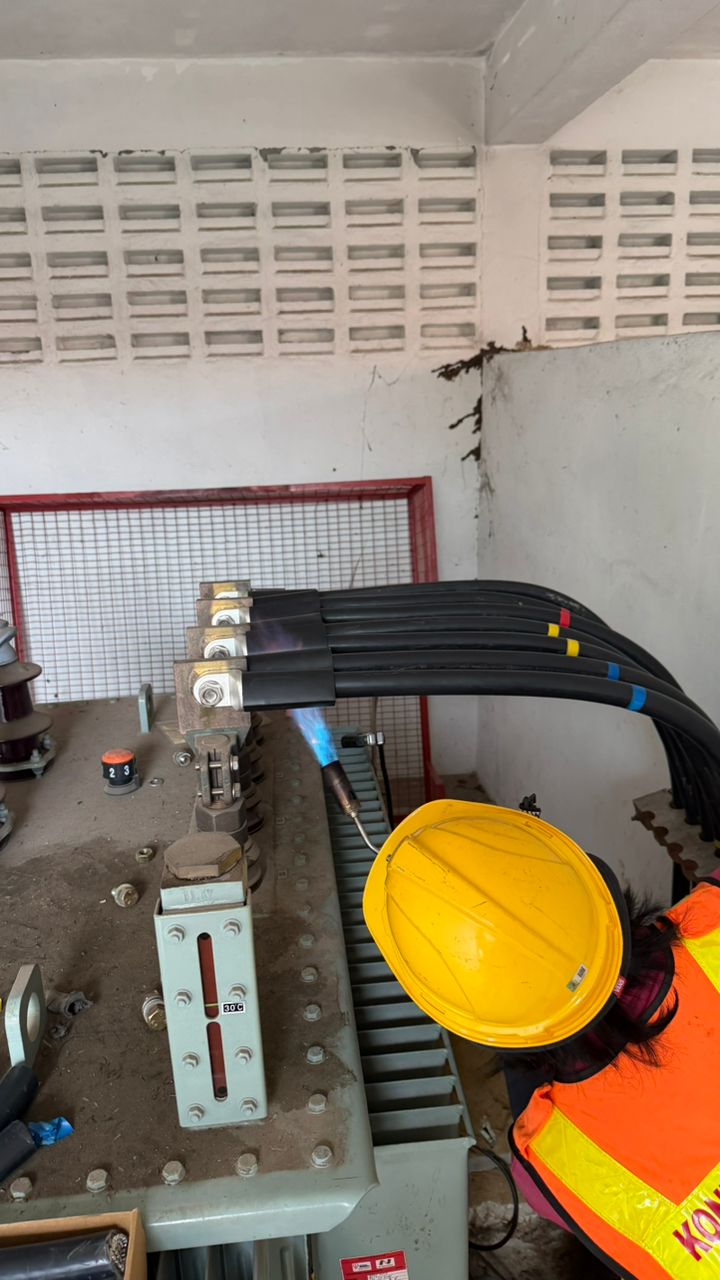
- HV and LV cable termination — incoming 11kV/33kV cables and outgoing LV cables are terminated with the correct heat-shrink or cold-shrink kits, cable lugs and torque values.
- Earthing — the transformer tank, neutral and cable screens are bonded to the substation earth grid, and earth continuity and earth resistance are verified.
- Oil filling & topping up — for oil-immersed units the oil level is checked and topped up with tested oil where required, and the conservator, breather and Buchholz relay are confirmed correctly set.
Pre-energisation tests
No transformer should be connected to the network until it has passed a full set of pre-energisation tests. These prove the windings, insulation and oil are all healthy:
- Winding resistance — measured on each phase to detect loose connections, damaged conductors or tap changer problems.
- Transformer turns ratio (TTR) — confirms the ratio between HV and LV windings on every tap matches the rating plate and vector group.
- Insulation resistance — a megger/PI test between windings and to earth confirms the insulation is dry and sound.
- Oil dielectric strength (BDV) — a breakdown voltage test on an oil sample confirms the oil can withstand the working stress; low BDV indicates moisture or contamination.
Why it matters: Energising a transformer with moisture in the oil or a reversed vector group can destroy a unit worth hundreds of thousands of ringgit in a fraction of a second. Pre-energisation testing is cheap insurance against a catastrophic, and entirely avoidable, failure.
Maintenance best practices
A transformer that is installed well but never maintained will still fail early. Planned maintenance catches developing faults while they are still small and cheap to fix. Our routine maintenance covers:
- Oil sampling & DGA — dissolved gas analysis detects overheating, partial discharge and arcing inside the tank long before they become visible, while BDV and moisture tests track oil condition.
- Bushing inspection — checking HV and LV bushings for cracks, tracking, contamination and tightness of connections.
- Silica gel breather — inspecting and replacing the breather so the transformer draws in dry air; a pink, saturated breather means moisture is entering the oil.
- Tap changer — checking off-circuit or on-load tap changer operation, contacts and correct setting.
- Thermographic checks — infrared scanning of terminations, bushings and connections under load to find hot spots before they burn out.

Warning signs of transformer failure
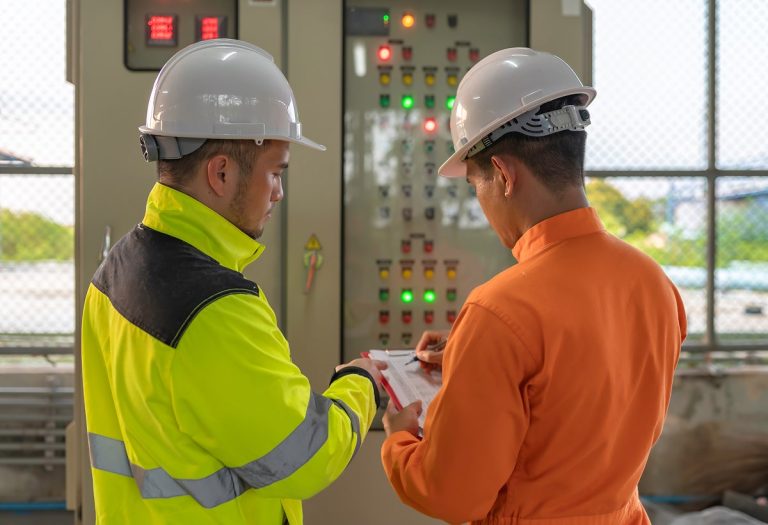
Between scheduled visits, site staff can watch for early symptoms that a transformer needs attention. The most common warning signs are unusual humming or loud buzzing, overheating with discoloured or blistered paint, oil leaks or a falling oil level, a saturated pink silica gel breather, gas collecting in the Buchholz relay, and rising combustible gas levels in a DGA report. Any one of these should trigger an inspection — acting early can mean a simple repair instead of a full transformer replacement and an extended outage.
Why use a licensed TNB contractor?
Transformer installation and testing require calibrated instruments, correct handling of oil and heavy plant, and competent persons registered with Suruhanjaya Tenaga (the Energy Commission). As a TNB Rakaniaga Strategik (Strategic Business Partner), NIKKISO-AYSHA has installed and maintained distribution and power transformers across Pulau Pinang, Kedah, Perak and beyond, backed by 30+ years of experience since 1993.
Key takeaways
- Choose the right transformer type — oil-immersed for outdoor distribution, dry-type where fire risk must be minimised.
- Installation quality — plinth, terminations and earthing — sets the transformer's whole service life.
- Never energise before winding resistance, TTR, insulation and oil BDV tests are passed.
- Oil sampling and DGA are the single most powerful tool for catching internal faults early.
- Watch for warning signs — overheating, leaks, a pink breather or gassing — and inspect before they escalate.
Frequently asked questions
What is the difference between oil-immersed and dry-type transformers?
Oil-immersed transformers use insulating mineral oil to cool and insulate the windings, giving high efficiency and overload capacity — the standard choice for outdoor 11kV and 33kV distribution. Dry-type transformers use air and cast-resin insulation instead of oil, so they carry a lower fire risk and are preferred indoors, in basements and in buildings where an oil leak would be unacceptable.
What tests are done on a transformer before energisation?
Winding resistance, transformer turns ratio (TTR), insulation resistance and polarisation index, and oil dielectric strength (BDV). Vector group, magnetic balance and earthing continuity are also verified so the transformer is proven safe before connection to the TNB network.
How often should a distribution transformer be maintained?
A visual and thermographic inspection at least annually, with oil sampling for BDV and dissolved gas analysis (DGA) typically every one to two years depending on load and criticality. Breathers, bushings and tap changers are checked at every visit.
What are the warning signs of transformer failure?
Unusual humming or buzzing, overheating and discoloured paint, oil leaks or a falling oil level, a saturated pink silica gel breather, gassing in the Buchholz relay, and rising combustible gases in a DGA report. Any of these should trigger an inspection before the fault escalates.